


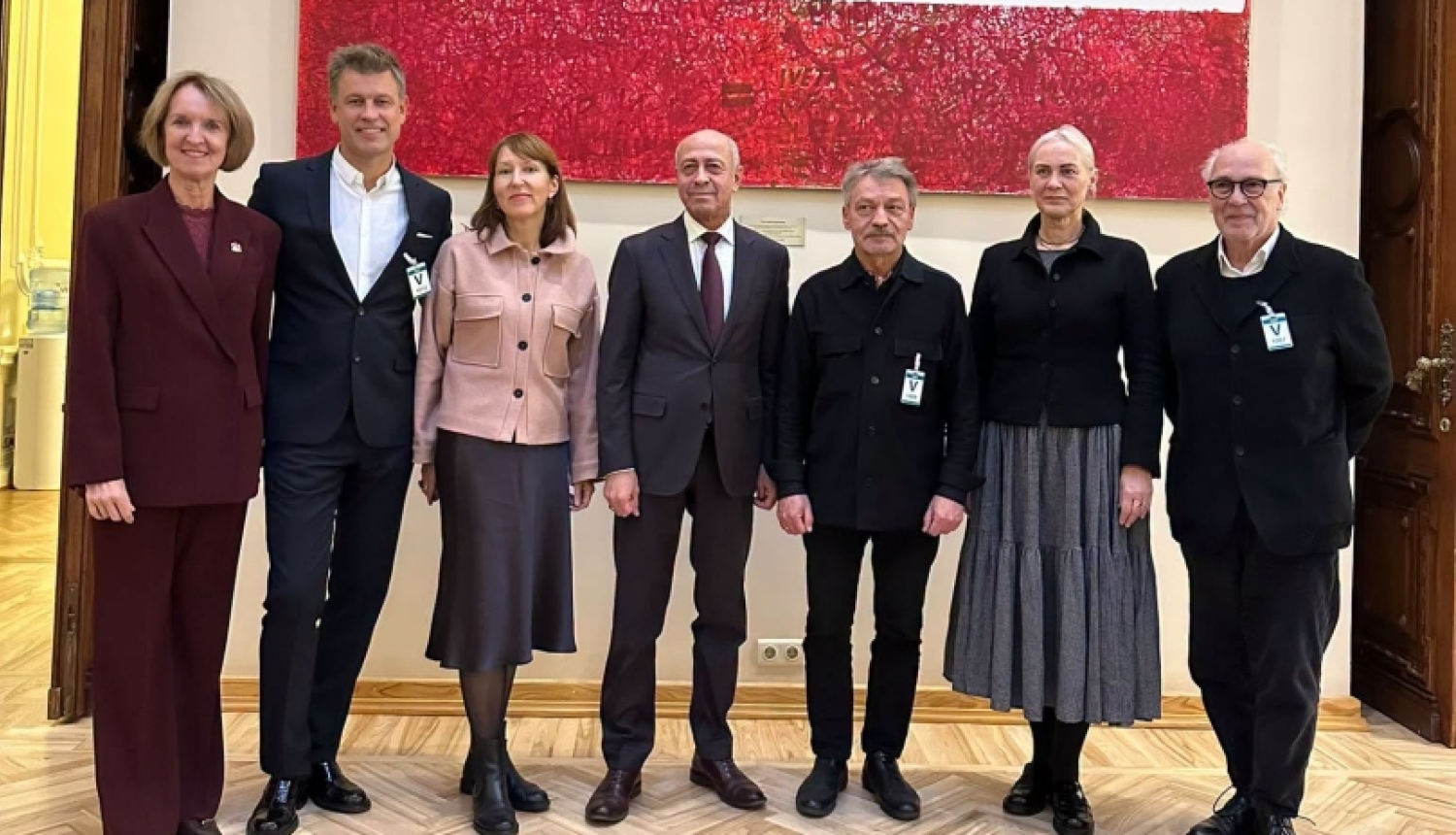
On 29 October 2026, the Latvian Parliament (Saeima) unanimously adopted the Architecture Law in its final reading, with 82 votes in favour. The law was promulgated by the President of Latvia on 11 November 2026 and will enter into force on 1 January 2027, with certain provisions taking effect on 1 November 2027.
The adoption of the law marks a significant milestone in the development of Latvia's architectural sector, establishing a dedicated legal framework for architecture and landscape architecture and strengthening the foundations for a high-quality, sustainable built environment that serves the public interest.
The drafting processof the Law was coordinated by the Ministry of Culture in close cooperation with the Latvian Architects' Association and the Latvian Association of Landscape Architects, as well as the National Council for Architecture.
Discussions on the need for an Architecture Law in Latvia began nearly thirty years ago. Its development has involved public authorities and professional organisations, with the Latvian Association of Architects (LAS) playing a key role in advancing the legislative initiative.
The Architecture Law consists of four chapters and transitional provisions, covering the following areas:
1. General provisions
The law aims to establish conditions for the creation and management of high-quality Baukultur, architectural and spatial environments, and landscapes, ensuring everyone's right to live in a favourable, climate-resilient environment while promoting cultural, social, economic and environmental sustainability.
It defines architecture as the art of shaping the environment through an integrated approach to the living environment, encompassing spatial development, urban planning and individual buildings, including their exterior and interior design.
The law establishes four fundamental principles of architecture and landscape architecture:
- Spatial quality – the quality of individual buildings, their interrelationships, scale, spatial structure and interaction with the surrounding environment.
- Cultural value – architecture and landscape architecture as forms of cultural expression that contribute to cultural heritage, local identity and lasting value for future generations.
- Long-term value – balancing cultural, social, economic and environmental interests to create sustainable and lasting value for society.
- Public interest – recognising the quality of the built environment as a shared public interest and balancing individual and collective interests to enhance quality of life and well-being.
2. Responsibilities and functions in the field of architecture
The law strengthens architecture policy at both national and municipal levels, defining institutional responsibilities and establishing mechanisms for promoting architectural quality.
National architecture policy. The Ministry of Culture is responsible for developing and coordinating national architecture policy, promoting the quality of architecture and the built environment, raising public awareness, and coordinating Latvia's representation in the field of architecture nationally and internationally. The Ministry of Smart Administration and Regional Development is responsible for national landscape planning policy.
National Architecture Council. The law defines the role of the National Architecture Council as an advisory body contributing to the development and implementation of architecture and landscape architecture policy, providing recommendations on national, European Union and international legislative and policy initiatives, and facilitating cooperation between public authorities and the architectural professions.
Municipal architecture policy. Municipalities are required to develop and implement architectural quality policies, integrate architectural and landscape architecture principles into spatial development planning, promote high-quality Baukultur and encourage public participation.
Each municipality must designate an institution or an official, such as a city architect, responsible for architecture-related matters. Municipalities retain the flexibility to determine the most appropriate institutional arrangement and may delegate these responsibilities to another municipality.
The responsibilities include developing architectural quality criteria and guidelines, contributing to spatial planning, providing professional advice at the early stages of development projects, facilitating cooperation between stakeholders and issuing opinions on development proposals that may significantly affect the urban environment. If a municipal building authority or another competent institution takes a decision that differs from such an opinion, it must provide justification.
Architectural competitions. The law establishes a framework for architecture, landscape architecture and urban planning competitions as a means of selecting the best design solutions. Competitions are mandatory where required by other laws or by municipal spatial plans for designated areas. Detailed procedures for organising competitions will be established through Cabinet regulations.
Integration of art and design. The law also introduces requirements for integrating art and design into publicly funded projects subject to mandatory architectural competitions, as well as into publicly funded buildings and outdoor spaces of significant public importance. The relevant criteria and procedures will be established through Cabinet regulations.
Copyright. The law requires competition briefs and contracts for architectural and landscape architectural services to address the transfer of authors' economic rights and the right to modify copyrighted works. It also establishes safeguards against the unconditional transfer of such rights irrespective of competition results or the conclusion of a contract.
3. Professional activities in the field of architecture
The law defines the scope of professional activities of architects and landscape architects, encompassing services within the construction process, spatial development planning, related professional fields, public administration, education and research.
It protects the professional titles of architect and landscape architect, restricting their use in professional activities to individuals holding the respective professional qualifications.
The law also defines the role of professional creative organisations representing architects and landscape architects. Their responsibilities include promoting professional development and cooperation, strengthening the role of architecture and landscape architecture in society, cooperating with public authorities on architectural and landscape quality, and encouraging public engagement with the principles of Baukultur.
4. Certified architects and certified landscape architects
The law establishes the requirements for independent professional practice, including the necessary professional qualifications, knowledge and skills, and a professional practice certificate.
Professional certification and supervision. Responsibility for certification and the supervision of independent professional practice is entrusted to two existing professional organisations:
- the Latvian Association of Architects – for architects;
- the Latvian Association of Landscape Architects – for landscape architects.
Rather than establishing a separate professional chamber, the legislative framework builds on the expertise and experience of existing professional organisations. It also provides the basis for introducing a formal certification system for landscape architects.
Professional obligations. Certified architects and landscape architects are required to undertake continuing professional development, report on the type and place of their professional practice, exercise due professional care, comply with professional codes of ethics, maintain professional independence and an impeccable reputation, and personally carry out or directly supervise their professional activities. Professional services must be based on a written contract or another binding document.
The law also establishes mechanisms for professional supervision and disciplinary measures in cases of non-compliance with applicable legislation or ethical standards, including warnings, competence assessments and temporary suspension of practice certificates. Decisions concerning certification and disciplinary measures may be appealed in court.
Implementation and transitional provisions
The Architecture Law will enter into force on 1 January 2027. The provisions concerning architectural competitions and the integration of art and design, as well as the new certification and professional supervision system for landscape architects, will apply from 1 November 2027.
The Cabinet of Ministers is required to adopt the necessary implementing regulations by 31 October 2027, including those governing architectural competitions, the integration of art and design, professional certification and the supervision of independent practice.
By 28 February 2027, the Cabinet must also prepare and submit amendments to the Construction Law and the legislation governing regulated professions and the recognition of professional qualifications, aligning these with the new Architecture Law.
Transitional provisions ensure the continued validity of existing architects' practice certificates until their expiry and provide a mechanism for eligible landscape architects to obtain their first practice certificate without a certification examination until 31 August 2030.
The adoption of the Architecture Law represents an important step in strengthening architectural quality as a matter of public interest, establishing clearer institutional responsibilities and reinforcing the role of professional organisations in safeguarding the quality of architectural practice in Latvia.
The full text of the Architecture Law (in Latvian) is available in the official gazette of the Republic of Latvia, Latvijas Vēstnesis.
Contact for further information:
Anda Kursiša, Board Member of the Latvian Association of Architects
anda.kursisa@latarh.lv
+371 26403930
www.latarh.lv